TradingKey - As of the Asian trading session on September 18, WTI crude oil prices opened sharply lower. Intraday WTI crude (USOIL) prices fell by nearly 5% at one point to a low of $96.2, dropping back below the $100 mark and extending cumulative losses over the past three trading sessions to about 8.4%. Brent crude (UKOIL) was also under pressure, sliding to around $103 at one point.
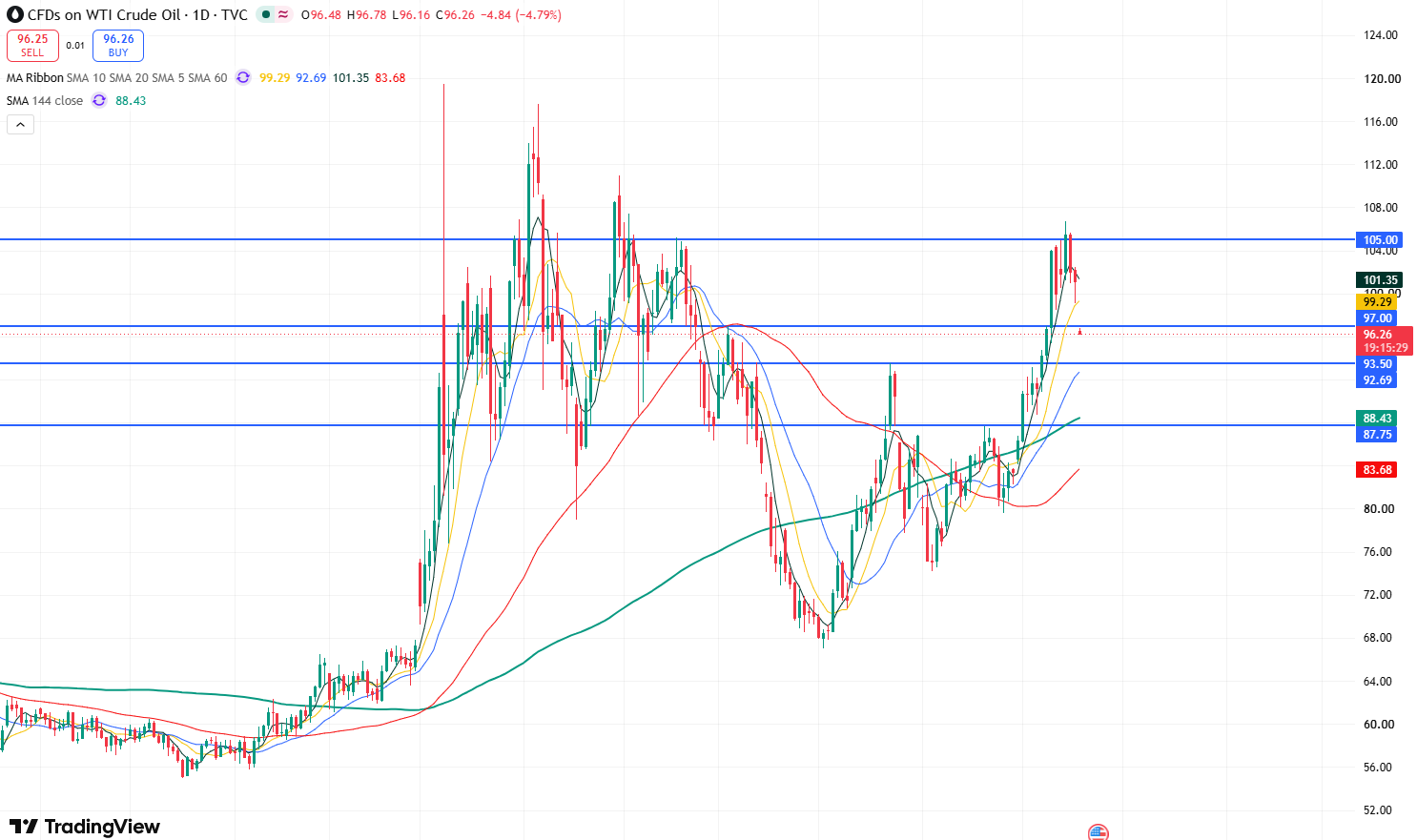
WTI crude oil price daily chart, Source: TradingView
The rapid decline in oil prices was primarily driven by easing Middle East supply concerns. Following an attack on its East-West pipeline, Saudi Arabia began ship-to-ship transfers near the Port of Sohar in Oman to boost crude oil supplies to Asian refineries. Meanwhile, market reports indicate that Saudi Arabia plans to restore about half of the damaged East-West pipeline's capacity within days, alleviating previous market fears of major disruptions to Saudi exports.
The pipeline was previously shut down following a drone attack, serving as a vital conduit for Saudi crude to the Red Sea amid transport constraints through the Strait of Hormuz. Supply risks had pushed WTI above $106 earlier this week, but as alternative transport routes expanded and expectations for pipeline repairs improved, a portion of the geopolitical risk premium was quickly erased.
U.S. inventory data also put pressure on oil prices. Data from the U.S. Energy Information Administration (EIA) showed that commercial crude oil inventories fell by only about 640,000 barrels last week, a smaller draw than the market's expectation of about 1.5 million barrels. Meanwhile, both gasoline and distillate inventories increased, signaling that supply pressures on refined products have eased.
In addition, the Federal Reserve raised the federal funds rate by 25 basis points to 3.75%–4.00% this week and signaled further policy tightening. Higher interest rates and a stronger U.S. dollar heightened market concerns over slowing energy demand, while also fueling profit-taking in crude oil.
However, Middle East supply risks have not been fully dispelled. Vessel traffic through the Strait of Hormuz remains significantly below pre-conflict levels, and the full repair of the damaged Saudi pipeline will still take time. With WTI falling back below $100, the market will continue to monitor the progress of Saudi Arabia's pipeline restoration, U.S.-Iran relations, and shipping conditions in the Middle East.
Find out more